
Modern science is beginning to echo what ancient systems have long understood. At the center of this conversation is the vagus nerve—a powerful communication pathway linking the brain and the digestive system. When this connection is strong and harmonious, digestion improves, inflammation decreases, and the body shifts into a state of healing. When it is disrupted, we often see the opposite: bloating, discomfort, anxiety, and chronic imbalance.
The Gut is a Zen universe: responsive, intelligent, and always seeking equilibrium. It likes to be in the middle.
In Chinese medicine, the Earth element is in the middle of the 5 elements. The Spleen is an earth element organ and can be used to represent the whole digestive system. When the Spleen is out of balance, worry tends to arise. When there is worry, the Spleen will likely become unbalanced. Since ancient times, it has been known that the digestion affects the mind and the mind affects the digestion.
The Vagus Nerve: Your Inner Bridge
The vagus nerve is a key component of the parasympathetic nervous system—often called the “rest and digest” system. It carries signals between the brain and the gut, influencing everything from stomach acid production to motility and even the composition of the microbiome.
But here’s the important part: the vagus nerve functions best when the body feels safe.
In a world that constantly pulls us into stress and urgency, many people spend most of their time in a sympathetic (“fight or flight”) state. In this mode, digestion is deprioritized. Blood flow shifts away from the gut, enzyme production decreases, and the delicate rhythm of digestion becomes disrupted.
Returning to center—back to that Zen “middle”—is essential for restoring gut health.
Relaxation as Medicine
Because the vagus nerve thrives in a state of calm, relaxation is not a luxury—it’s a therapeutic necessity.
There are many ways to gently activate and support the vagus nerve:
- Meditation and mindful breathing help slow the heart rate and signal safety to the nervous system
- Listening to calming music can shift brainwave patterns and reduce stress responses
- Acupuncture works directly with the nervous system, helping to rebalance and regulate the vagal nerve. I have some favorite treatments that you may have already experienced.
- Massage therapy encourages relaxation and improves circulation
- Chinese herbal medicine supports internal harmony and digestive function at a deeper level
These practices don’t just “feel good”—they create measurable changes in how the body functions.
Simple Ways to Stimulate the Vagus Nerve
In addition to relaxation, certain daily habits can gently stimulate the vagus nerve and support digestion:
- Bitter flavors (like arugula, dandelion, and digestive bitters) help trigger digestive secretions. I’ve been using bitters before meals to aid digestions. Here’s my fav:
BETTER BITTERS - Chewing thoroughly signals the body to prepare for digestion and reduces strain on the gut
- Slow, mindful eating reinforces the “rest and digest” state
- Singing or gargling (with gusto) activate muscles connected to the vagus nerve and can improve its tone
These small, consistent actions can have a profound cumulative effect.
I have learned some of these vagus nerve “life hacks” from Dr. Cheryl Karthaus ND, who I highly recommend. She and I have been geeking out on the results from my and my son’s Biome Fx results.
Check out Cheryl’s website here.
Returning to the Middle
In both Eastern and Western perspectives, the message is clear: the gut functions best when the body is not pushed to extremes. It thrives in a state of balance, rhythm, and calm awareness.
When we nourish the vagus nerve—through relaxation, mindful habits, and supportive therapies—we help the body return to its natural center. From this place, healing becomes not only possible, but sustainable.
A Deeper Reset
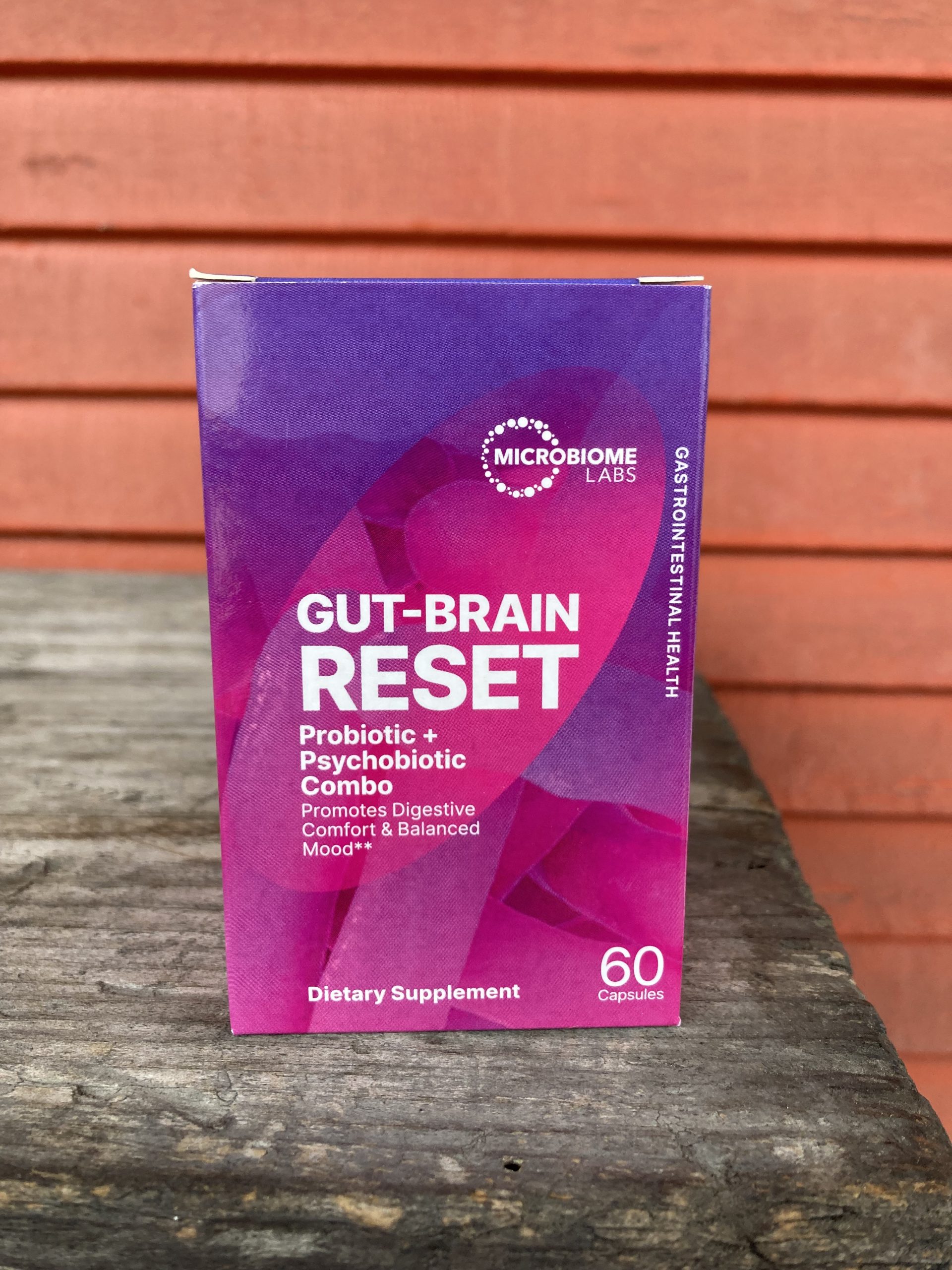
For patients looking to support the gut-brain connection more directly, we often recommend Microbiome Labs Gut-Brain Reset, a targeted probiotic supplement designed to nourish both digestive function and emotional balance. (See a more detailed post here.)
This formula combines two specific strains of Bifidobacterium longum that have been studied for their ability to support the gut-brain axis—helping to ease occasional digestive discomfort while also promoting a more resilient stress response and balanced mood.
Rather than acting as a short-term “reset,” this supplement works gently over time to support microbial balance, digestive regularity, and communication between the gut and nervous system.
When used alongside acupuncture, mindful eating, and nervous system regulation practices, it can be a valuable tool in helping the body return to its natural center—where both digestion and calm awareness can thrive.
The gut, like a Zen garden, does not need force—it needs attention, rhythm, and balance. When we learn to meet it in the middle, it responds with clarity, resilience, and ease.