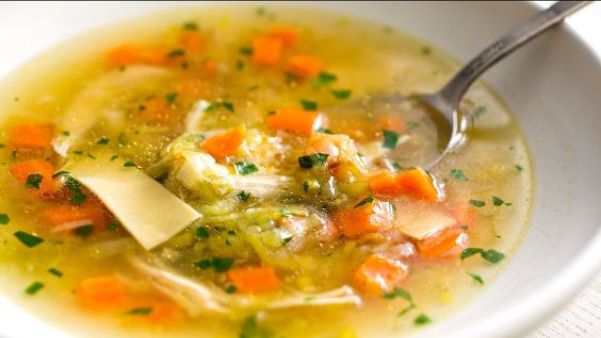
Tag: soup

  • Coconut Curry with Chicken Tofu and Vegetables

    Through the years many people have asked me for this recipe. I like to spruce up the basic curry with lots of veggies to make it super delicious, but keeping it simple works well. Curry is very flexible, so see what’s in your fridge and use any protein and veggies that you have available. If you have a can of coconut milk, curry paste, chicken or tofu and a few vegetables you’ve got enough to make a curry.

    Foundational Ingredients:

    • 1 can full fat unsweetened coconut milk
    • 2-3 Tablespoon curry paste (red or panang)
    • 1 onion, chopped
    • Chicken and/or tofu – about a pound – chopped into 1 inch cubes
    • 1 teaspoon salt

    Optional ingredients:

    • 1 red pepper, chopped
    • 1 carrot, sliced thinly on the diagonal
    • 1-2 cups mushrooms – white, shiitake or any variety, sliced or quartered
    • 2 cloves garlic, minced
    • 1-2 Tablespoon lemongrass, minced
    • 1 kaffir lime leaf, julienned
    • 1 Tablespoon curry powder
    • 1 Tablespoon coconut or palm sugar
    • 1-2 cups green beans or broccoli, pre-steamed
    • 1-2 cups kale, cabbage or spinach, chopped
    • 1 teaspoon fish sauce
    • 1-2 cups of broth

    Optional Garnishes:

    • Lime
    • Thai basil
    • Cilantro
    • Toasted peanuts or other nuts, chopped
    1. Start steaming any veggies that need it and get some rice going.
    2. Heat 2 Tablespoon of the thick cream from the top of the canned coconut milk and/or 2 Tablespoon coconut oil and curry paste.
    3. Sauté onions in coconut cream until translucent, then add pepper, carrots, mushrooms, garlic, lemongrass, kaffir lime leaf. Mix and let cook a few minutes then add half a can of coconut milk.
    4. Spread chicken and/or tofu evenly over the top of the veg mix, sprinkle with curry powder if desired, sugar, and salt right on the chicken. Let cook for 5 or more minutes, then turn over.
    5. Add the rest the of coconut milk, the rest of the vegetables, fish sauce if using and/or salt to taste. Add water or broth if you want to make it soupier. Cook until the chicken is no longer pink and vegetables are cooked.
    6. Serve over rice or have as a soup. Garnish with lime, fresh herbs or nuts.
  • The Healing Power of Chicken Soup: A Remedy for Upper Respiratory Infections

    By Shawndra Meader, FNTP, MScN

    Chicken soup is known as a comfort food and traditional recipe the world over. While it’s difficult to narrow down the location of the roots of this ubiquitous medicine, it is widely believed that chicken soup as we know it today has its earliest origins in ancient China and Egypt.

    In ancient China, soup made from poultry and medicinal herbs was a common remedy for various ailments. Chicken, known for its nourishing properties, was often used as a base, and herbs were added to enhance specific health benefits. This practice influenced the development of many traditional Chinese medicine recipes that still exist today.

    The earliest recorded use of chicken soup as a remedy for colds and respiratory issues dates back to ancient Egypt. The famous Jewish philosopher and physician Maimonides, who lived in the 12th century, praised chicken soup as a remedy for colds and asthma. He likely drew inspiration from earlier Egyptian practices that involved consuming hot chicken broth to treat symptoms of respiratory illness.1

    Chicken soup also has deep roots in Middle Eastern cuisine, where it was commonly made with spices, vegetables, and grains like rice or barley. The Middle East has a long history of using food as medicine, and chicken soup was often regarded as a fortifying meal, particularly for the sick and elderly.

    Today, chicken soup recipes can be found in cultures worldwide, each with its own twist, influenced by local ingredients and culinary traditions. Whether it’s sopa de pollo in Latin America, sinigang na manok in the Philippines, or canja de galinha in Portugal, the common thread is its reputation as a healing, comforting dish.

    Why It’s Often Recommended for Colds and Respiratory Infections

    The ingredients of chicken soup—chicken, vegetables, herbs, and spices—all have health benefits on their own, and work synergistically when brought together in a dish like soup. In addition, soup is hydrating and comforting when we are not feeling well; warm liquids improve the flow of mucus and are soothing to irritated tissues. Steam from a hot bowl can help open nasal passages and ease sore throats.

    (more…)
  • Japanese Beef and White Sweet Potato Stew

    0C4D7B13-89EE-468D-9ECF-482954112A78_1_105_c

    Simple and delicious. The base is bone broth, tamari, ginger with sweet Japanese cooking wine – slow cooked stew beef with Japanese white sweet potatoes. Yum. A hit with the kids.

    Ingredients

    2 pounds local stew beef (boneless chuck 1 – 1 ½ in chunks)

    3 cups bone stock or broth (chicken, turkey, beef)

    ¼ cup tamari or soy sauce

    10 slices of ginger, peeled

    Black pepper

    Sea salt

    1 lemon (Zest goes in with the potatoes. Juice at the end)E95E380D-ABC0-4796-BCD6-DBC75E5FBD30_1_105_c

    2 pounds Japanese white sweet potatoes, peeled and cut into 1-1 ½ in chunks. Alternatively use regular sweet potatoes or butternut squash.

    Scallions (optional)


    Salt and pepper the meat. Turn oven on to 350 F.

    In large Dutch oven heat 1 T bacon fat, ghee, butter, coconut oil or olive oil.

    Sear half of the meat, turning once about 5 minutes per side. Put aside. Sear the other half and put aside.

    (more…)

  • Soup Basics: How to Make Soup in 6 Easy Steps

    chicken soupIf you know the basics of soup making, you don’t need to follow the recipe word for word, but instead can glean inspiration from recipes and use what you have on hand. With a nice sharp chef knife, a cutting board and a Dutch oven there are endless possibilities. See equipment below.

    Step 1: Soup base –  Mirepoix

    The base of the soup usually starts with sautéing some vegetables, which flavors the oil or fat. Choose a fat that can handle the temperature. Read more about FATS here.

    • Ghee, clarified butter
    • Coconut Oil
    • Lard
    • Bacon Fat
    • Tallow (beef fat)
    • Butter – keep heat fairly low
    • Olive oil – also not recommended to sautéed at high heat

    Warm the oil/fat on medium heat in a thick-bottomed deep soup pan, such as a Dutch oven, and sauté:

    1-2 finely chopped onion, shallot or leek

    then 1-2 carrots, and if I have it, celery, both chopped finely, or medium-fine, about a half inch chunks.

    Sprinkle with sea salt (maybe a ½ teaspoon or so, I dunno exactly, I don’t measure, I add a little as I go along and usually end up needing to add more at the end.)

    Chefs call the classic mixture “mirepoix”, otherwise known as the “holy trinity” in the cooking world.

    Step 2: More vegetables

    If you want to add more vegetables, you can add them to the mirepoix about 5-10 minutes after the carrots and onions.

    What do you have in the fridge? Here are some vegetable ideas:

    • Sweet potatoes, parsnips, celerac, butternut squash
    • Mushrooms – crimini, shiitake
    • Bell peppers – green, red, yellow
    • Kale, any variety (more…)
  • Veggie Compost Broth

    Keep a bag or quart container near your compost bin. When you find scraps that you’d like to use in your stock, toss them in the bag and put them in the freezer. Store the bag in the freezer and bring it out when you want to use it.

    • onions, garlic, scallion, leek ends
    • carrot, ginger peels and ends
    • celery tops
    • kale stalks
    • cabbage extras
    • stems and leaves of parsley, cilantro, thyme
    • left-over chicken bones

    To make stock, toss your veggie compost in 4-8 quarts of water and boil for several hours.  You can also do it in the slow cooker.

  • Bone Broth

    Bone broth is deeply nutritious. The collagen gets pulled out of the bones and is the best medicine for our bones (way better than Calcium tablets!!). The broth will thicken up when it cools. The thicker the better. It’s like liquid essence.

    You can use either beef marrow bones or shanks, and/or chicken bones. Also lamb bone, turkey bone, whatever you roasted up, you can use the bones. You can collect them in the freezer until you have enough to make a batch.

    Here is a recipe for bone broth from un-roasted (not from roasted chicken or beef roast) bones. This is the long and most delicious version. If you are using bones left over from a roast you can skip the blanching and roasting steps. I have several variations and tips at the end that may be useful for you to customize the broth for your dietary needs (gluten free, grain free or nightshade free), so read those out before diving in.

    • 4-6 lb of marrow bones, soup bones, beef shank bones and a joint bone*
    • Olive oil
    • 1 T flour – wheat, buckwheat, sorghum or anything that you have**
    • 1-2 large onions, coarsely chopped
    • 3-4 large carrots, peeled and coarsely chopped
    • 3-4 celery stalks, coarsely chopped
    • 3-4 cloves of garlic, peeled and lightly crushed with knife
    • 1 inch ginger, sliced
    • 8-10 black peppercorns
    • 1 T white vinegar or apple cider vinegar ***

    OR 1 -14 ounce can tomato puree

    and/or ½ cup red wine

    • Sea salt to taste
    • Herb options (use all, some, none or others):
      • bunch parsley sprigs or stems
      • 2-3 bay leaves
      • 2-3 fresh thyme sprigs
      • 1 t coriander seed
      • 2-3 cloves or allspice
      • Star anise
      • Lemongrass, kaffir lime leaves and galangal
    • Preheat the oven to 425 and bring several quarts of water to boil in your largest stock pot.
    • Blanche the bones in boiling water for 10 minutes to remove any bitter parts. Discard the water, straining the bones.
    • Pat the bones dry and rub with olive oil and sea salt. Then rub 1 T of tomato paste and 1 T flour into the bones and place them in a large roasting pan. Roast the bones on 425 for 30-40 minutes, or on 350 for an hour.
    • Halfway through the roasting, roughly chop and lightly oil the onions, garlic, ginger and other vegetables (not the herbs) and add to the roasting pan. Check regularly, we want to caramelize but not burn them. This step is optional, but if possible, at least do the onions and garlic.
    • Once the bones and vegetables are golden and not too burnt, remove from oven. Put roasted bones in a large stock pot – put the veggies in the fridge for now. Deglaze the roasting pan with the red wine or water (heating on stove top if possible) and add to the stock pot for extra flavor. Add vinegar or tomato puree. Add enough filtered or good quality water to cover plus an inch or two.
    • Heat over medium heat, stirring occasionally, bringing to a very low simmer. Reduce the heat to lowest setting and gently simmer partially covered (or uncovered) for at least 12 hours or ideally 24 hours to extract all the marrow and gelatin from the bones. Keep the lid cracked and do not boil to prevent sourness.
    • Use slotted spoon to remove scum occasionally in the first few hours, to prevent bitterness.
    • In the last 1-2 hours, add the vegetables, bay leaf, ginger, coriander, cloves and peppercorns (whichever you are using) and continue to simmer gently
    • In the last half hour add the fresh parsley and thyme, or other fresh or light herbs.
    • Remove from heat and let cool for a while on a cooling rack or in a sink full of ice water (or out in the snow) without a lid. Remove bones from pot with tongs and strain the rest with fine mesh strainer and or cheesecloth, discarding the solids. Allow stock to cool further, then refrigerate. Once it cools, remove congealed fat but cutting into a tic tac toe shape and lifting it out of the gelatinous stock.
    • You can use this broth to drink daily as is or to make all sorts of soups! You can pour cool broth into plastic or glass containers, leaving a little room for expansion. If you are using glass, you will want to refrigerate before freezing to reduce the chance of the glass cracking. Personally, I cool the broth to nearly room temp and use quart-sized yogurt containers and a sharpie to label and date.

    Here is a 12 minute video that I found helpful for learning bone stock or broth making tips:

    https://drcate.com/video/how-to-make-beef-bone-broth/


    Variations and tips:

    *You can order these from your local farmer or grocery store. Not every supplier will offer the same array of bones, though, so be prepared to shop around. Call in advance and ask for a knee joint or similar. You can also use chicken bones, though I based this recipe on beef and lamb bone broth.

    ** If you are avoiding gluten or grains, use a gluten-free flour such as buckwheat or sorghum, or a grain-free flour such as tapioca – alternatively, skip this step.

    ***Acid helps pull the nutrients such as calcium out of the bones – you can use vinegar, tomatoes and/or red wine to do this.

    An alternative to using all fresh vegetables is to use 1-2 quarts of “veggie compost,” i.e. veggie scraps that you saved over the past couple weeks. I do not recommend using cruciferous (aka brassica) vegetables such as cabbage, broccoli, or kale in your broth as the smell and flavor that they impart in the broth is not pleasant. Read more about veggie compost broth

    Do not boil the broth. Boiling will turn the broth cloudy and bitter. Keeping the lid cracked wide, or off completely will help.

    If you are avoiding nightshades, do not use tomato puree.

    If you only have dried herbs, you can put them in a tea ball and drop them in the pot for the last hour, removing when you turn the heat off.

    You can make beef bone stock without the vegetables if you want – make a soup starting with mirepoix, which will give it the great vegetable flavor, and add the stock as the liquid. For more about soup making, see my Soup Basics blog.

    If there is meat on the bones that you are going to want to pull off the bones, you may find it easier to strain the bones before adding the vegetables and herbs. I sometimes cook the vegetables and herbs in the broth for an hour after removing the bones.
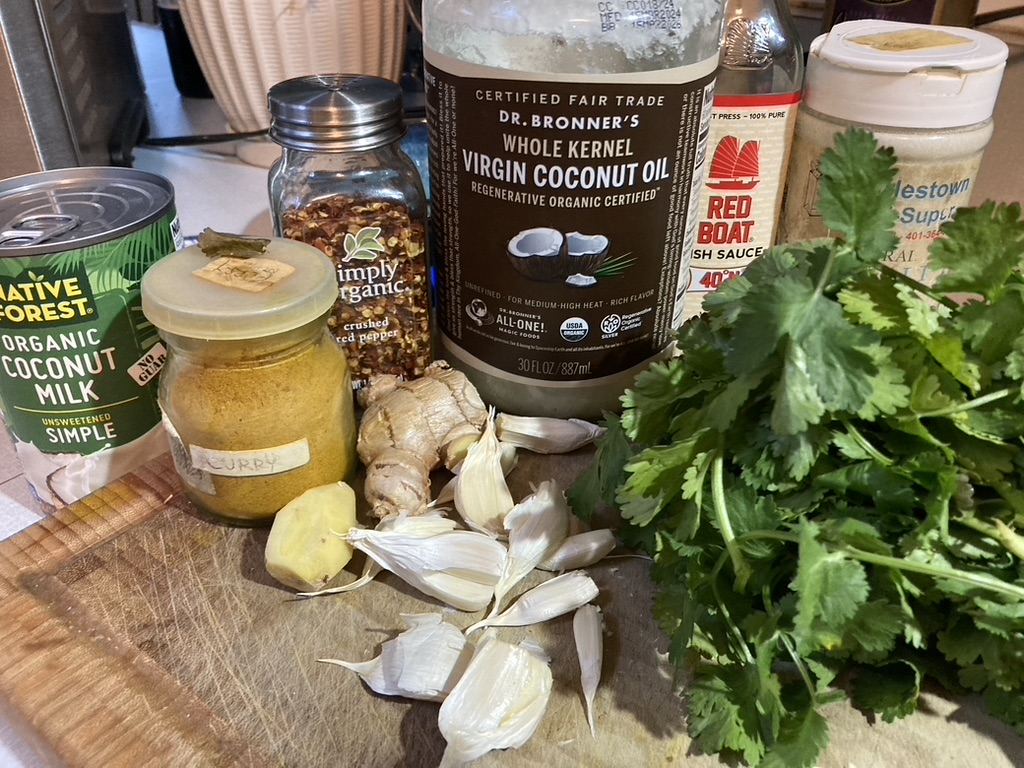
     

  • Slow Cooked Chicken Coconut Curry

    The house will smell so good when you get home if this is in the slow cooker.

    Toss the together into the slow cooker and cook 6-8 hours on low:

    4-6 bone-in chicken thighs or 3 chicken legs (the marrow in the bone makes a tasty broth and is chock full of nutrients)*

    6 shallots (or 1-2 onions)

    1 sweet potato, peeled and chopped

    2-3 potatoes, peeled and chopped

    1 red bell pepper, chopped

    8 crimini (or other type of) mushrooms, stems removed and quartered

    ½ bunch of collards or kale, chopped small (or add spinach at the end)

    2 stalks lemongrass, smash with handle of a knife and then chop into 1 inch pieces**

    1 T ginger, peeled and minced

    1 T curry paste, panang, red, yellow or whatever variety you like***kid-friendly

    1 t salt

    cover with water

    after it has cooked and you are almost ready to eat, add:

    ½ cup coconut milk

    spinach or chard, chopped, if you didn’t use collards or kale

    splash of fish sauce in each bowl or 1 T in the whole batch

    a squeeze of lime in each bowl or a whole lime in the whole batch

    garnish with cilantro

    optional: cook rice noodles and serve soup on top. if adding curry paste to individual bowls, add the curry and a little broth first, then the noodles, then the rest of the soup, coconut milk, lime and garnishes.


    *ideally: cook the chicken first overnight in the slow cooker or for a couple hour in the morning to make a broth. You can pull the chicken out and skim it. Then add the rest of the ingredients and reduce cooking time to 4-6 hours.


    **don’t eat the lemongrass chunks


    ***kid-friendly – if only some people in your family like spicy food, omit the curry paste and instead put 1 t curry + 1 T hot broth into each bowl, stir to combine, then add the rest of the soup. You can do the same with the coconut milk if you want, adding a little into each bowl and giving a stir.

  • Pineapple Avocado Gazpacho Smoothie

    I just LOVE this!


    ¼ pineapple, chopped (about 1 ½ cups)

    1 avocado

    1 T red onion or scallion, chopped

    Handful of cilantro

    Juice of ½ lime (or more if it’s not particularly juicy)

    ¼ t sea salt

    ½ chili (optional)


    Put it all in the blender, push the button and you’re done.

    If you want it a little chunky, you can reserve half of the pineapple to throw in at the end and pulse a few times.

  • Vietnamese Chicken and Rice Soup (Chao Ga)

    This recipe accompanies Vietnamese Chicken and Cabbage Salad


    Put in a large soup pot:

    three local organic chicken legs

    approximately four quarts of water

    1 t salt (more…)